
English| EUR
Suggested for you
More currencies
Choose a language
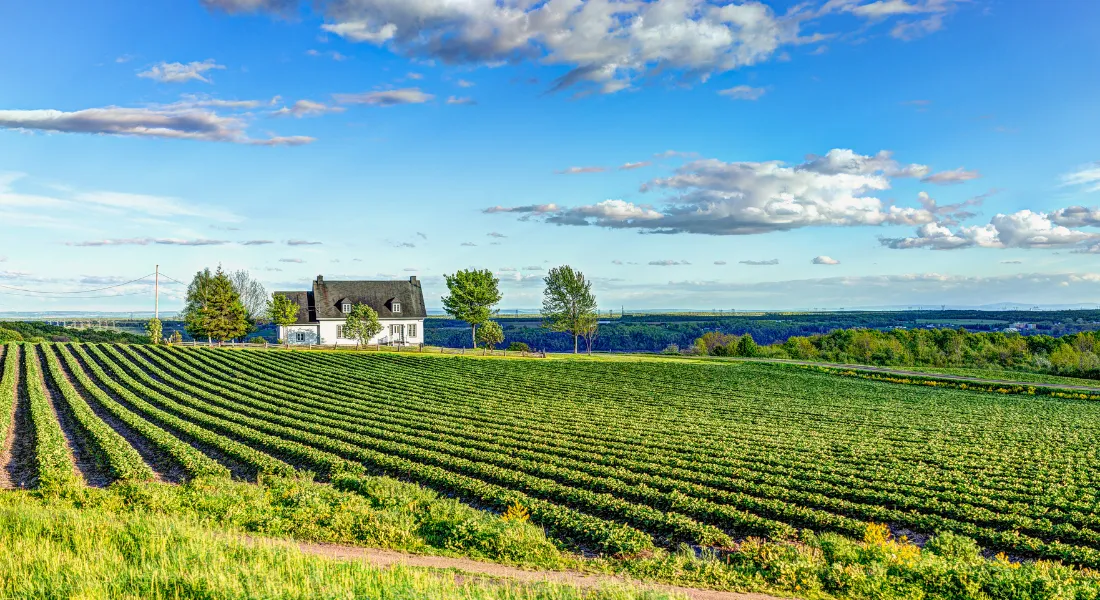
The Island of Orleans operates as a working agricultural landscape twenty minutes from Quebec City, where a designated culinary route connects family-run cider houses, berry farms, chocolate makers, and cheese producers across 67 kilometers of shoreline road. Each stop on the trail functions independently—no central ticket, no fixed itinerary—so visitors design their own circuit based on what's open and what they want to taste.
Quick answer
The Island of Orleans taste trail is a self-guided culinary route spanning the island's six parishes, connecting artisan producers, farm stands, vineyards, and heritage food makers along Route du Mitan and Chemin Royal. Entry to the island itself is free; individual producer visits and tastings are priced independently, typically ranging from complimentary samples to paid guided tours. The best arrival window is 09:00–17:00, when most farms, chocolatiers, and tasting rooms are open to visitors.
The island of orleans taste trail operates without gates, tickets, or scheduled departures. It is a 67-kilometer loop of shoreline road that threads through orchards, strawberry fields, and riverside parishes where the same families have farmed since the 1600s. What makes it a trail is not signage or branding but density: more than twenty artisan producers—cider makers, bakers, cassis growers, cheese cellars—cluster along a single route, most within ten minutes of each other, all accessible by car or bicycle. The island's agricultural economy rests on terroir. Cold winters and clay-loam soil favor hardy crops—apples, blackcurrants, potatoes, small grains—and the St. Lawrence microclimate extends the growing season just long enough to ripen fruit that would fail on the mainland. Producers lean into that specificity. Cidreries press single-varietal ice ciders from McIntosh and Cortland apples harvested after the first hard freeze. Cassis farms distill their entire yield into liqueurs and preserves. A handful of vineyards cultivate cold-climate hybrids—Frontenac, Marquette—that produce wines with high acidity and tart berry notes. The result is a regional flavor profile you cannot replicate elsewhere: sharp, bracing, mineral. Most visitors anchor their route in one of two parishes. Saint-Pierre, on the island's southwest shore, holds the highest concentration of chocolate makers and boulangeries, plus the island's oldest general store. Saint-Laurent, facing the north channel, is orchard country—row after row of apple trees, cider houses with tasting bars, and farm stands selling fruit by the bushel. Between these two nodes, the Chemin Royal passes smaller operations: a goat dairy producing fresh chèvre, a microbrewery in a converted barn, a lavender farm that distills essential oils on-site. The trail's geography is forgiving. The loop is flat, the road well-paved, and every producer maintains its own parking area. You can cover the entire circuit in four hours if you skip tastings, or spend two days working through a curated list of stops. Seasonal timing shapes what you will taste. Spring brings rhubarb and greenhouse greens; summer yields strawberries, raspberries, and early apples; autumn is harvest season for cider apples, squash, and late berries; winter narrows the selection but opens ice cider production and holiday preserves. A handful of producers close entirely from November through March, while others keep year-round tasting rooms. The island's tourism office maintains a current list of operating hours and seasonal closures, updated weekly during shoulder seasons. No advance booking is required for farm-stand visits, though guided tastings at larger cidreries and vineyards often request reservations, especially on weekends between June and October. Transportation is the only logistical friction. The island has no public transit. Visitors arrive by private car, rental, organized coach tour, or bicycle—the latter feasible but demanding, given the loop's length and the absence of dedicated bike lanes on the busier southern shore. Parking at each producer is free and abundant. The bridge from the mainland, Pont de l'Île, handles traffic in both directions without tolls, though summer weekends generate backups during peak afternoon hours. Once on the island, navigation is intuitive: two main roads, Chemin Royal and Route du Mitan, circle and bisect the loop, and every producer displays roadside signage visible from a moving car. The island of orleans taste trail rewards preparation. Print a map, mark your priority stops, and confirm opening hours before you cross the bridge. Producers operate independently, so if a specific cheesemaker or winery is your anchor, verify its schedule. Tastings are not theatrical; they are transactional, efficient, and rooted in the product. You will leave with bags of apples, bottles of cider, wheels of cheese, and a clearer sense of what Quebec tastes like when it is not performing for tourists.
“The island's agricultural economy rests on terroir: cold winters and clay-loam soil favor hardy crops, and the St. Lawrence microclimate extends the growing season just long enough to ripen fruit that would fail on the mainland.”
The period from June through October offers the most consistent access to farm stands and producers along the taste trail. Plan your visit during the best arrival window of 09:00–17:00 to ensure shops and local artisans are fully active.
Warm, 20°C to 25°C. Peak season for berry picking and fresh harvests.
Mild, 10°C to 18°C. Ideal for apple harvesting and autumn foliage.
— Arrival between 09:00 and 11:00 provides the quietest experience at local stalls.
Verdict: Visit between September and October on a weekday, arriving within the 09:00–17:00 window to enjoy the peak harvest season with fewer crowds.
The Island of Orleans is located in the Saint Lawrence River, accessible via the Île d'Orléans Bridge. Travelers should note that personal transport is required as public transit options to the island are limited.
Route 368 to the Île d'Orléans Bridge
Direct transfer to the island
Plan your arrival within the 09:00–17:00 window to ensure local producers and farm stands are open and active during your visit. Detailed logistics and local maps can be found on the official site at https://tourisme.iledorleans.com/.
Access to the Island of Orleans is free for all visitors. Guided taste trail experiences are offered by independent operators and are ticketed separately.
Verdict: A typical visitor pays 0 CAD to access the island, with costs only applying if choosing to purchase a guided taste trail experience.
This clockwise route suits those driving the island's 67 km circuit, stopping at key producers with minimal backtracking. Budget six to seven hours, including farm-stand visits and tasting pauses.
Begin at the western parishes—Chocolaterie de l'Île d'Orléans for bean-to-bar samples, then Cidrerie Bilodeau for ice cider tastings. Allow 90 minutes combined.
Continue east to visit artisan workshops and the cassis (blackcurrant) producers along Chemin Royal. Stop at a roadside stand for fresh berries in season.
Pick up tourtière or buckwheat galettes from Boulangerie Blouin; their wood-fired oven produces limited daily batches. Eat at a riverside rest area midway along the north shore.
Head to the island's eastern tip for maple-sugar cabins and honey farms—Miel de l'Île d'Orléans offers hive tours by appointment. Factor 60 minutes for tastings and jar purchases.
Loop back west via Vignoble Sainte-Pétronille for fruit wines, then Fromagerie de l'Île for washed-rind cheeses. Both close by 17:00 in shoulder seasons, so confirm hours before departing.
Culinary Specialties on the Island of Orleans Taste Trail. The island is known for its agricultural heritage, offering visitors direct access to producers of cassis, strawberries, local cheeses, and artisanal breads. While many visitors enjoy items from farm stands, several established venues provide seated options for those wishing to sample regional specialties.
market
Located on the western side of the island, this site specializes in blackcurrant products, including wines, creams, and artisanal ice cream.
market
Situated in Saint-Pierre-de-l'Île-d'Orléans, this producer offers a variety of cow and sheep milk cheeses typical of the region.
market
Located in Saint-Laurent-de-l'Île-d'Orléans, this spot focuses on artisanal jams and jellies made from locally grown island strawberries and seasonal fruits.
café
Positioned in Saint-Jean-de-l'Île-d'Orléans, this bakery provides fresh traditional breads and pastries, suitable for picking up provisions for a picnic.
Everything you need to know about island of orleans taste trail
The island of orleans taste trail is a self-guided route showcasing local artisans, vineyards, and agricultural producers across the region. It highlights the rich culinary heritage of the island through various stops. Visitors can explore these sites at their own pace to discover regional specialties. This scenic route is a popular way to experience the local terroir and agricultural landscape.